Key Sections
A luxury brand is not a logo, a colour palette, or a tagline. A luxury brand is a promise of elevated experience — and every touchpoint, from your website's load speed to the way your salesperson answers the phone, either reinforces or breaks that promise.
Building a luxury brand from scratch is fundamentally different from building a mass-market brand. Mass marketing says "everyone." Luxury marketing says "the right few." Here's the 90-day system we use to build premium brands for our clients.
Days 1–14: Discovery & Positioning
Before any visual work, you need to know exactly who you are and who you're for. We run a 5-part discovery:
- Founder interview: What story, values, and obsessions drive this brand? Luxury brands always start with a founder's point of view.
- Competitor audit: Map 10 competitors on a 2x2 matrix (Price vs Experience). Find the white space.
- Customer interviews: 8–10 conversations with your ideal customers. Listen for emotional language, not demographics.
- Cultural context: What's happening in your category right now? What's the dominant story? Where can you differentiate?
- Positioning statement: One sentence: "For [audience] who [desire], [brand] is the [category] that [unique promise] because [reason to believe]."
Days 15–30: Brand Strategy
Positioning gets translated into a usable strategy document:
- Brand archetype: Are you the Sage (expertise), the Ruler (control), the Magician (transformation), or the Lover (intimacy)? Pick one. Not three.
- Brand voice: Three adjectives that describe how you sound. (Premium, Warm, Knowledgeable — not "professional, unique, innovative" — those are meaningless.)
- Brand pillars: 3–5 themes everything you create must reinforce. (For a luxury real estate brand: Craft, Location, Lineage, Discretion.)
- Brand story: The narrative arc customers hear at every touchpoint. Origin, struggle, transformation, promise.
- Pricing strategy: Luxury never discounts. Build value first, justify price second.
Days 31–50: Visual Identity
Now — and only now — do we design the logo and visual system. The strategy is the brief.
- Logo: Simple, timeless, scalable. Luxury logos work in single colour, reverse out, and at 16px favicons. Avoid trends.
- Colour palette: One dominant colour, one accent, 3–4 neutrals. Luxury uses restraint — 2–3 colours max in any composition.
- Typography: A serif for headlines (heritage, gravitas) + a clean sans-serif for body (modernity, legibility). Custom letter-spacing and line-heights.
- Photography style: Defined before any shoot. Lighting, mood, composition, models, locations — all aligned to the brand archetype.
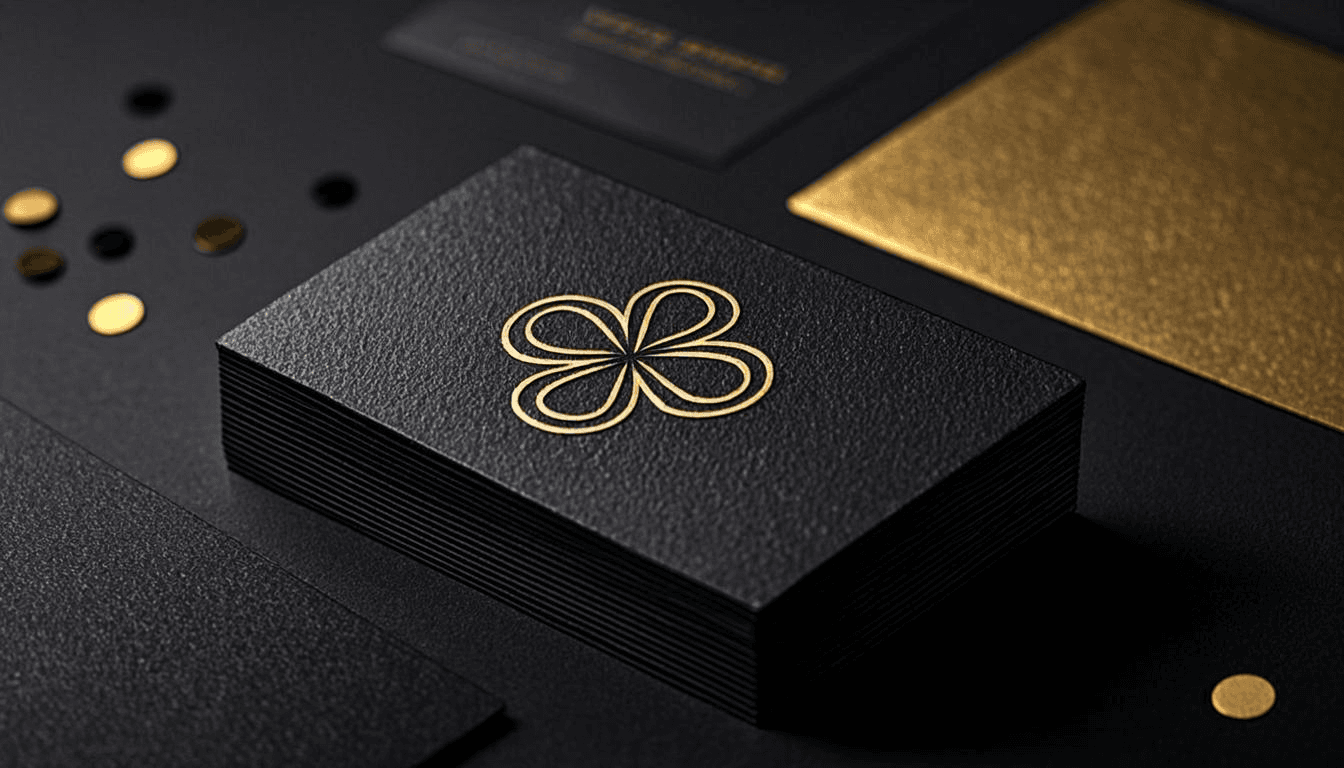
- Iconography & texture: Subtle details (gold foil, embossed paper, custom illustrations) that signal craft.
Days 51–70: Brand Touchpoints
The brand identity must work everywhere. Design and specify:
- Website: Generous white space, large imagery, slow deliberate animations, sub-2-second load time (slow = cheap; fast = premium)
- Social media grid: Curated, magazine-quality, never more than 3 colours per post
- Print collateral: Business cards (thick stock, soft-touch finish), brochures (uncoated paper, gold foil accents), packaging (minimal, tactile)
- Email signature & templates: Clean, branded, with a single CTA
- Signage & environmental design: Office, retail, or showroom experience
- Sales collateral: Proposal decks, pricing sheets, FAQ documents — all consistent
Days 71–90: Brand Launch & Internalisation
A brand only exists in the minds of customers. The launch is when it starts to live. We do this in 4 phases:
- Internal launch: Train every employee on the brand story, voice, and visual system. They're the brand now — not the logo.
- Soft launch: Update all digital touchpoints (website, social, Google Business Profile, email signatures) on the same day. Inconsistency signals cheapness.
- External launch: One coordinated moment — a launch event, a campaign video, a press feature, an influencer partnership. Luxury brands create moments, not ads.
- 90-day reinforcement: Audit every touchpoint monthly. Are we still on-brand? Where are we drifting?
What Luxury Brands Do Differently
After 12 years of building premium brands, we've identified 5 patterns that separate true luxury from "premium-looking but not premium-feeling":
- Restraint over abundance: Luxury brands show less, not more. Three products on a clean page beats 30 products in a cluttered grid.
- Story over features: Mass brands list features. Luxury brands tell origin stories. The Hermès Birkin isn't sold as "a leather bag with gold hardware."
- Exclusivity over accessibility: Luxury doesn't chase customers. Customers chase luxury. Waiting lists, invitation-only events, limited editions.
- Discretion over visibility: Luxury brands don't scream. They whisper. Logo size, colour saturation, ad frequency — all dialled down.
- Craft over scale: Luxury brands talk about how something is made, who made it, and how long it took. Mass brands talk about how cheap it is.
The Most Common Luxury Branding Mistake
Trying to look premium without being premium. A gold logo on a cheap business card signals "trying too hard." A simple wordmark on thick, soft-touch paper signals "I don't need to try." Luxury is felt in the smallest details — paper weight, kerning, the soft click of a website's hover state, the tone of a salesperson's voice.
If you're charging premium prices, every touchpoint must feel premium. One cheap touchpoint breaks the spell.
Want to build a brand that commands premium prices? Our team offers a free brand audit — we'll review your current identity across 12 touchpoints and identify what's reinforcing or undermining your premium positioning.